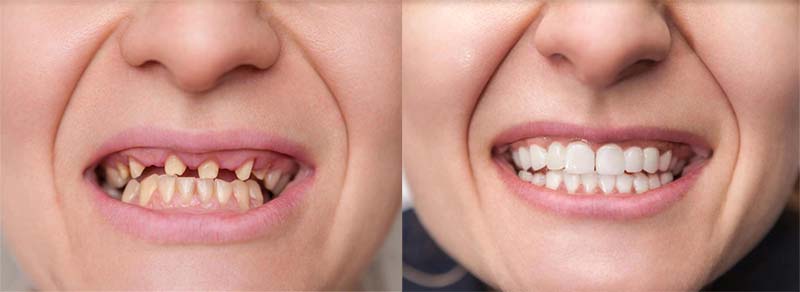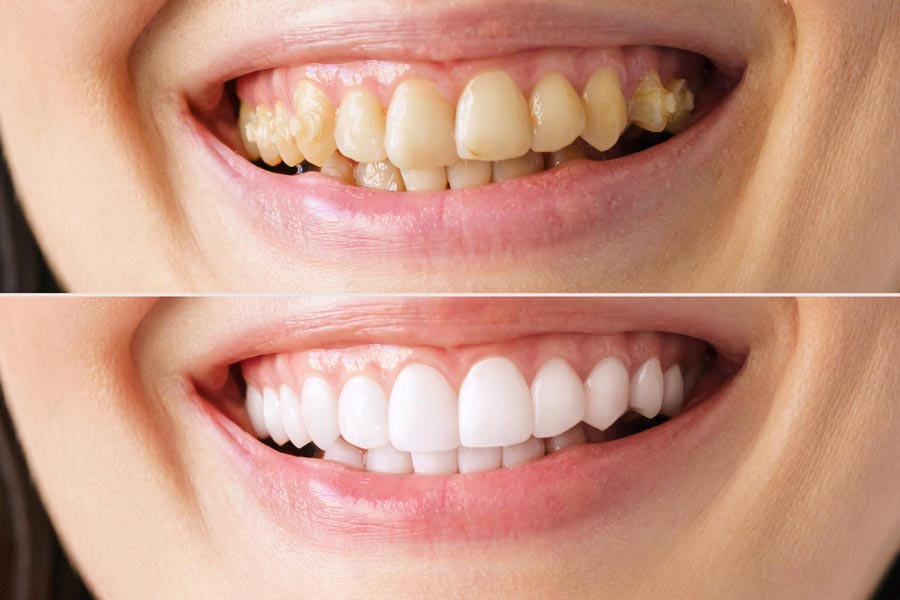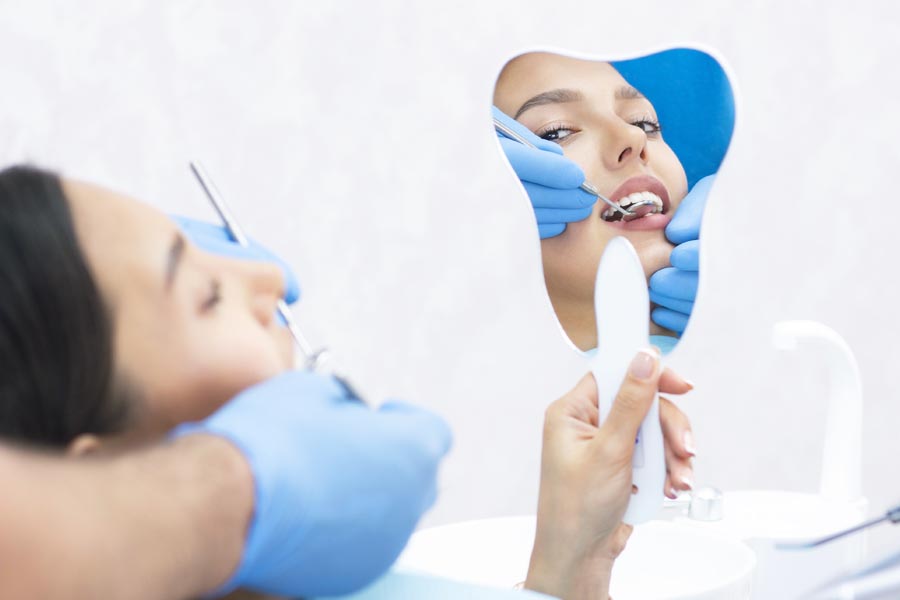
Full mouth rehabilitation, also known as full mouth reconstruction or full mouth restoration, is a dental procedure that repairs a patient's smile to improve its overall health, function, and aesthetics.
Some advantages of full mouth rehabilitation include:
The smile is a reflection of one’s oral health! For a smile -makeover beautifully aligned teeth with healthy gum is an absolute necessity.Smile makeover takes into consideration the tooth color, tooth size, tooth shape, tooth position, lip position, lip length, gum position, and gum color. The change of one’s smile involves re-alignment or veneering or change of shape or colour of teeth, so that the teeth fulfill the requirements of a beautiful smile.
WHAT ARE THE PRECAUTIONS TO BE TAKEN
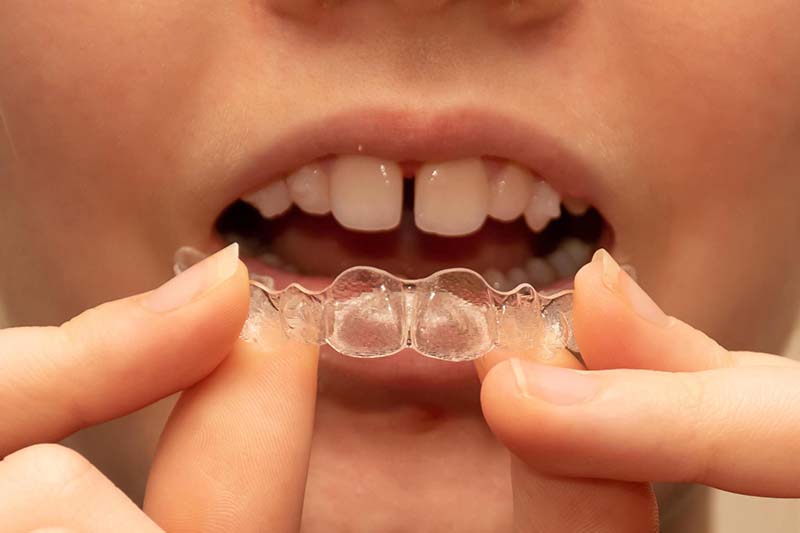
Clear Aligners are transparent trays made of special material which are used to straighten teeth just like braces. They use gentle and constant force to move the teeth in the required position without going through the hassles of metal wires and brackets. They are custom made for each patient through a digital scan.
Though aligners are the most comfortable option, yet there are certain things that need to be kept in mind while you have it on. Your Orthodontist will give you a set of guidelines that should be followed diligently such as below:
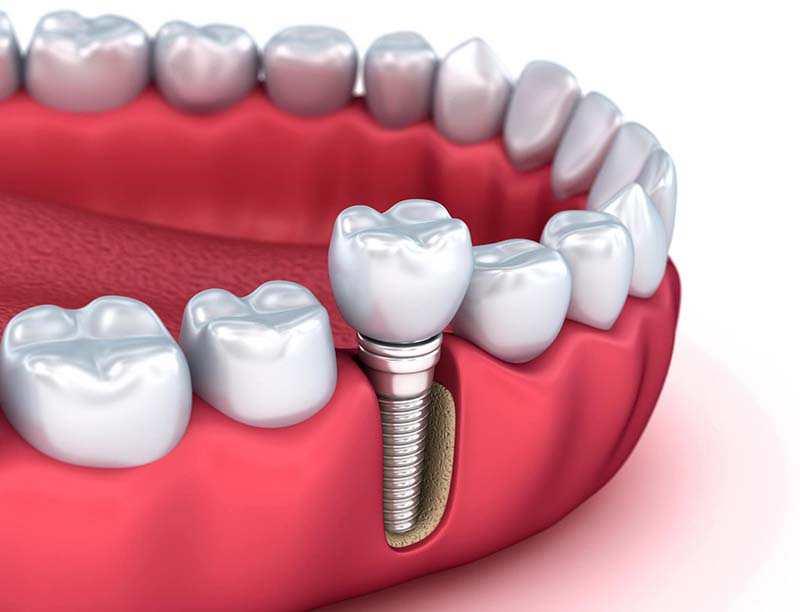
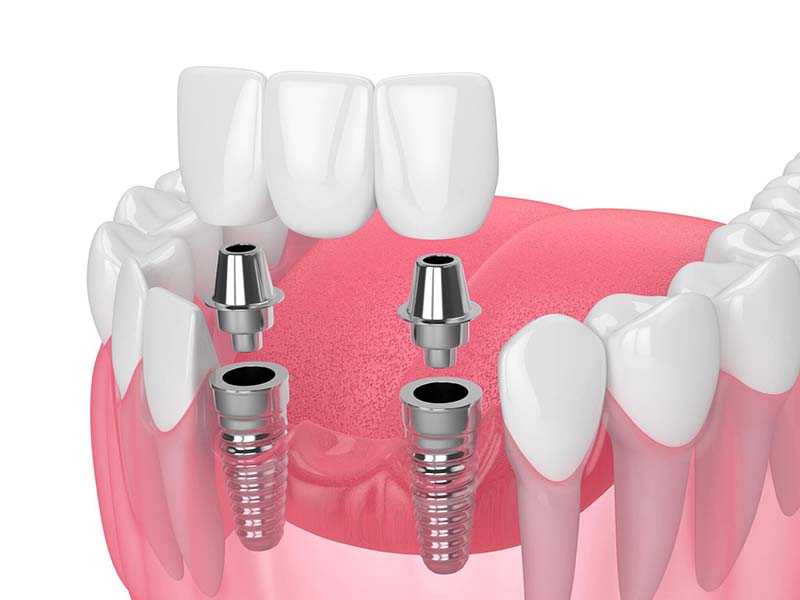
Dental implants are easily the most popular and also the ideal solution, for replacing your missing tooth/teeth. They have definitely changed the course of dentistry in the last quarter of a century or so. A dental implant is basically a titanium post which is surgically inserted into the jawbone beneath the gum line to work as a tooth root. Post insertion, an implantologist will attach a crown on top of the implant to ensure the appearance of a natural tooth. Tooth Implants not only look and feel like your natural teeth but also function like.
One can face the problem of missing teeth at any point in life. Tooth loss can be due to trauma, accident, severe gum disease, tooth decay or even due to poor oral hygiene. If left untreated missing teeth can lead to various consequences such as:
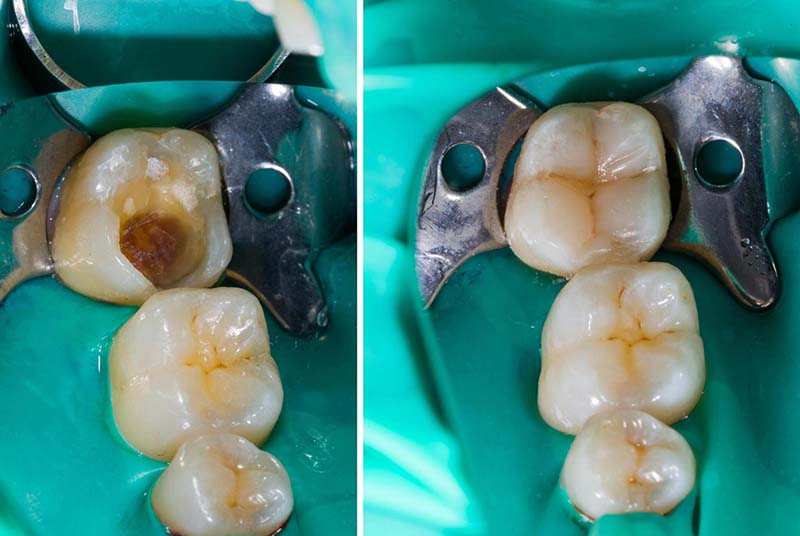
Dental Filling is a treatment modality to restore missing tooth structure which could have been a result of decay or trauma. Decay makes tooth hollow. Dental Filling helps to fill this gap and protect it from further decay. A filling is also used to repair broken or cracked tooth and the teeth which wear off due to dental habits like teeth grinding, nail biting etc.
There are various signs and symptoms where fillings can be required. The symptoms could be as below:
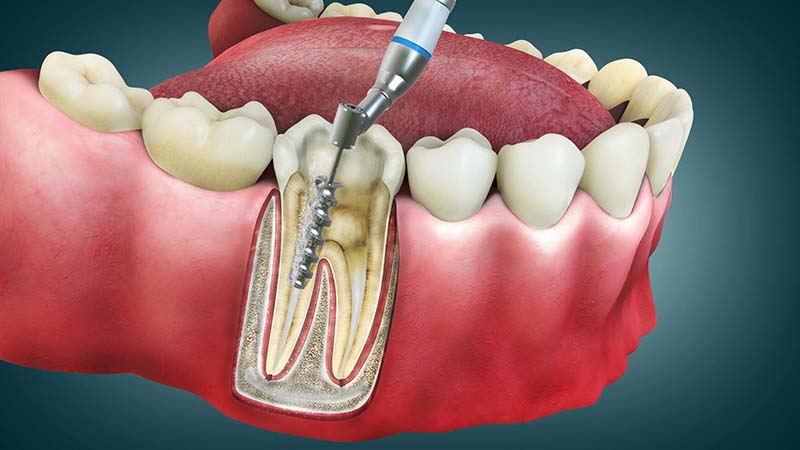
The outer portion or Crown of a tooth is a three-layered structure namely – Enamel, Dentin & Pulp. If the tooth decay is limited to the first two layers, it can be corrected with Filling/ Restoration. In case the tooth decay reaches the third layer and causes inflammation or infection of pulp, an RCT or Endodontic Treatment is needed.
Root Canal Treatment is done on a damaged or infected tooth. Infection could be due to a cracked or broken tooth, deep decay, gum diseases or maybe due to repeated dental treatment on a particular tooth. It becomes extremely important to get the Root Canal Treatment as:
Dental Crowns are a tooth-shaped cap which is placed on the tooth to restore the shape, size, and appearance of the tooth. It also enhances the strength of the tooth. If the major part of the tooth is missing, then the crown is the best solution for it. By placing the crown, a tooth can function normally again.
Dental crowns are used as caps on missing or fractured tooth to protect the life of your teeth. Dental Crowns are needed to:
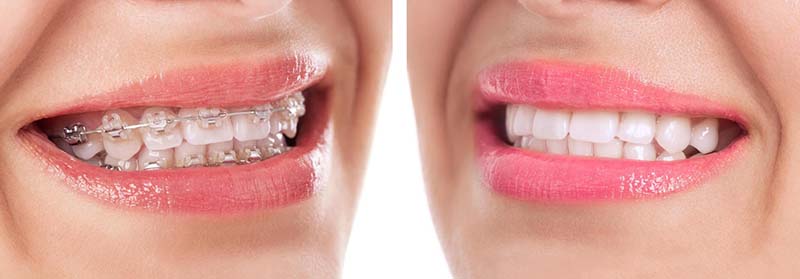
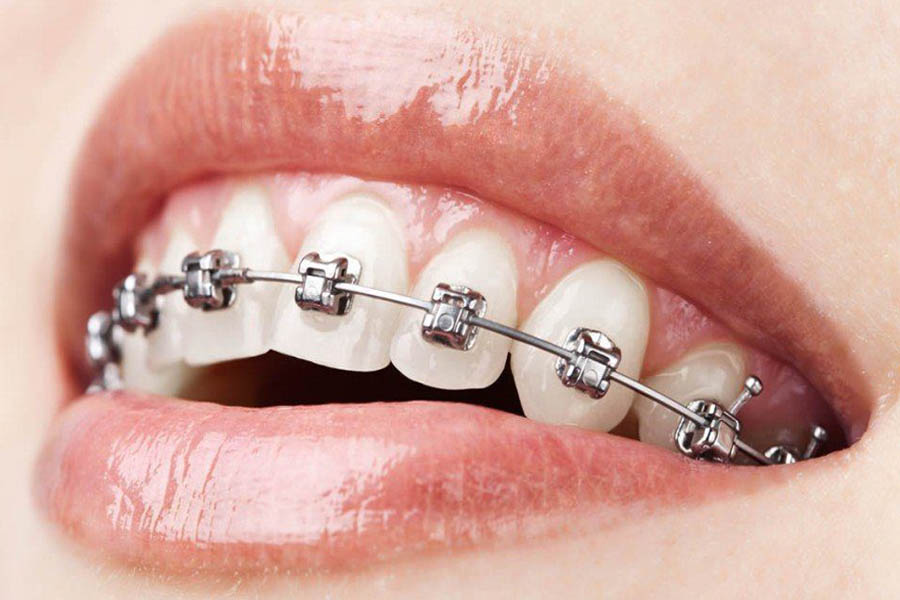
Dental braces are appliances which are used to align or straighten the teeth and guide the teeth to the corrected position. They are made up of wires, brackets, and bands. Braces aid to correct irregular teeth positioning, jaw correction, improvement in chewing and smile aesthetics. Your dentist is the best person to guide on treatment options and modalities depending upon dentition.
This is a stage where adult teeth or permanent teeth replace primary teeth which aid in appearance, speech, and digestion. During this phase, people can face many issues which can be corrected by Braces. These issues include:
Orthodontic treatment is a way of straightening or moving teeth, to improve the appearance of the teeth and how they work. It can also help to look after the long-term health of your teeth, gums and jaw joints, by spreading the biting pressure over all your teeth.
Many people have crowded or crooked teeth. Orthodontic treatment will straighten the teeth or move them into a better position. This can improve their appearance and the way the teeth bite together, while also making them easier to clean. Some people have upper front teeth that stick out and look unsightly. These 'prominent' teeth are more likely to be damaged, but orthodontic treatment can move them back into line. Or the way the upper and lower jaws meet can cause teeth to look unsightly and lead to an incorrect bite. Orthodontic treatment may be able to correct both of these problems. When the teeth don't meet correctly, this can put strain on the muscles of the jaw, causing jaw and joint problems and sometimes headaches. Orthodontic treatment can help you to bite more evenly and reduce the strain.
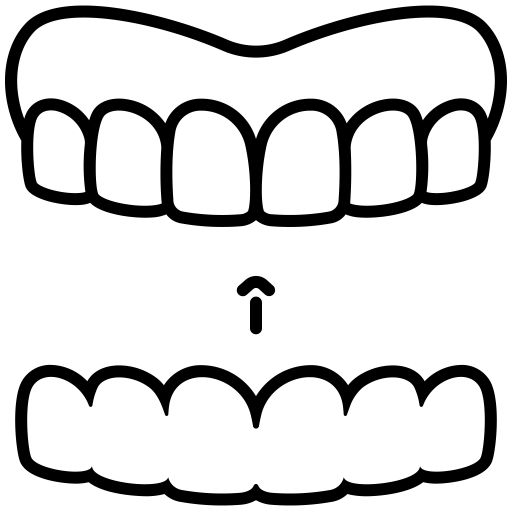
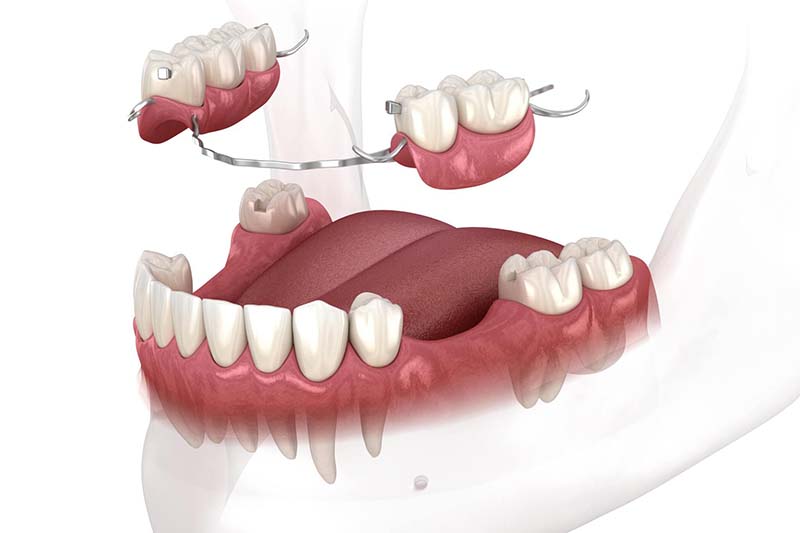
Dentures are removable appliances that are used as a replacement of missing teeth and tissues. They are the artificial teeth which enable normal functioning of human mouth. Dentures are of two types – Complete & Partial. Complete dentures are advised when all the teeth are missing, and partial dentures are applied when some natural teeth are missing. They are custom made especially for a set of teeth and gum line. Complete Dentures fit over the upper teeth and roof and on the lower teeth placed like a horseshoe. They are conventional dentures and are removed during the night for cleaning. Partial Dentures consists of replaced missing teeth attached to artificial gum connected by a metal framework which helps to hold the denture in place. Missing teeth can change the position of other teeth hence partial denture help to overcome this problem and keep the teeth intact.
WHAT IS THE PROCEDURE INVOLVED IN PLACING DENTURES?
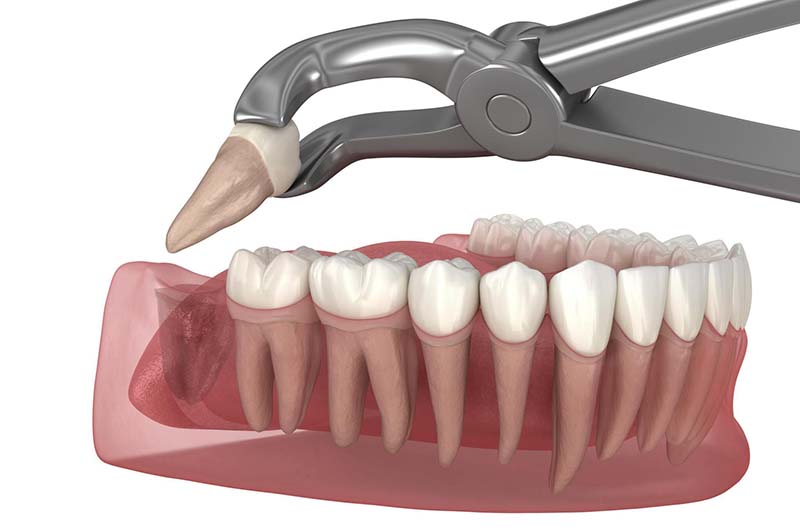
Wisdom teeth often known as third molars are the last teeth to erupt. One usually gets them in late teens or early twenties. However, even instances of eruption in late adulthood are common. If they erupt smoothly and without any interruption, then they can be proved as an asset. But the problem with third molars is that in case they do not erupt properly or are misaligned, they would need to be extracted. If they are poorly aligned, then they can damage the adjacent teeth.
SYMPTOMS TO GET WISDOM TEETH REMOVED
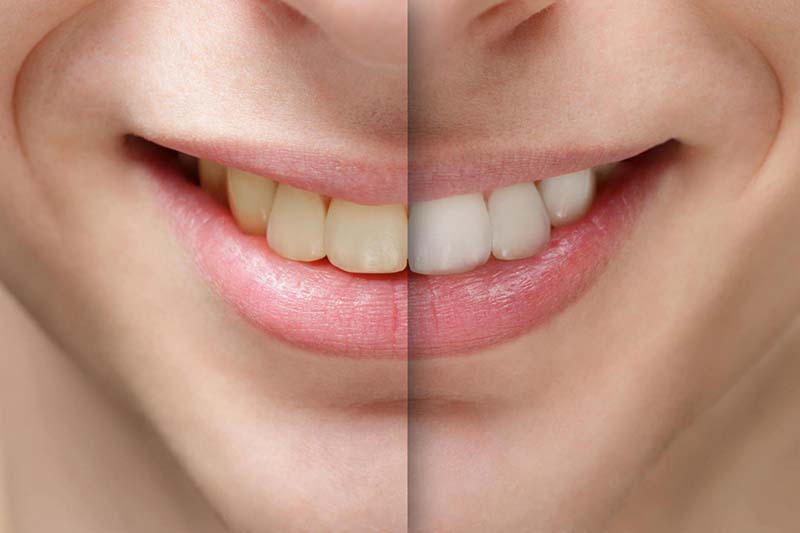
Teeth whitening is a process of removing stains from the tooth surface and restoring the natural color of the teeth. Whitening is a one-time procedure performed by a dentist. It is amongst the most common and widely adopted procedure. With the advent of the latest Dental technology, we have advanced whitening treatment procedures which give reliable and long-lasting results.For better results do get it done from a trained dental professional.
The enamel which reflects the natural color of your tooth can stain or dentin which is the inner surface of teeth stains and yellows the teeth. The causes of tooth discoloration are varied. Though many causes can be prevented yet there are some which are not in control. The causes of discoloration are:
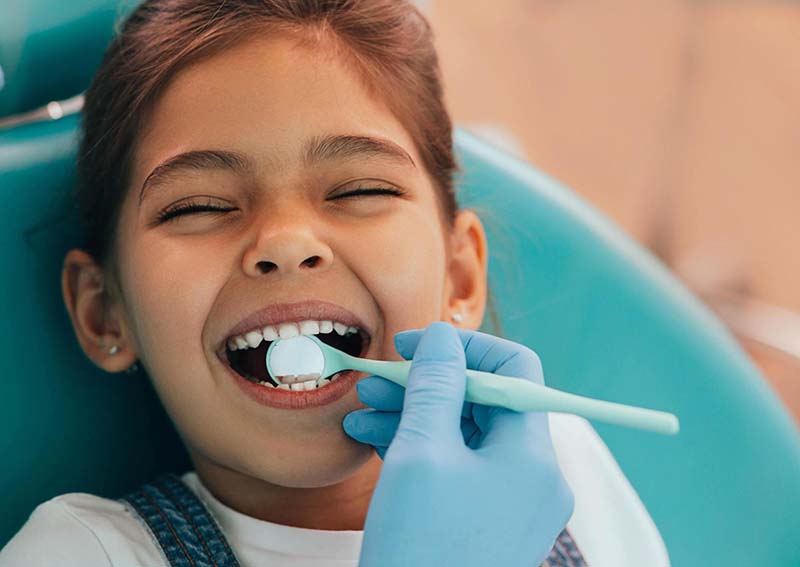
Humans start teething when they are as young as 6 months old and develop their set of primary ‘milk’ teeth. At the age of 6-7 years, humans start losing their milk teeth and the permanent set of teeth start emerging. Because the milk teeth will eventually fall off, some parents tend to ignore taking their child to a dentist. However, these milk teeth form the basis of developing permanent teeth. If proper care is not taken the problems can emerge which will last a lifetime. In recent years the cases of caries in children have grown manifold. Therefore, it is always advised to start taking care of your baby’s teeth in the very early stages of their life. This includes setting Oral Hygiene routine and regular visits to pediatric dentist.
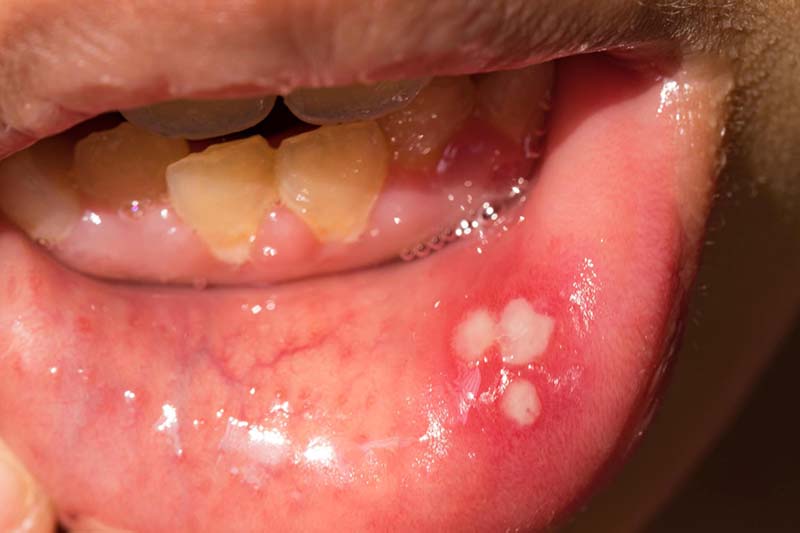
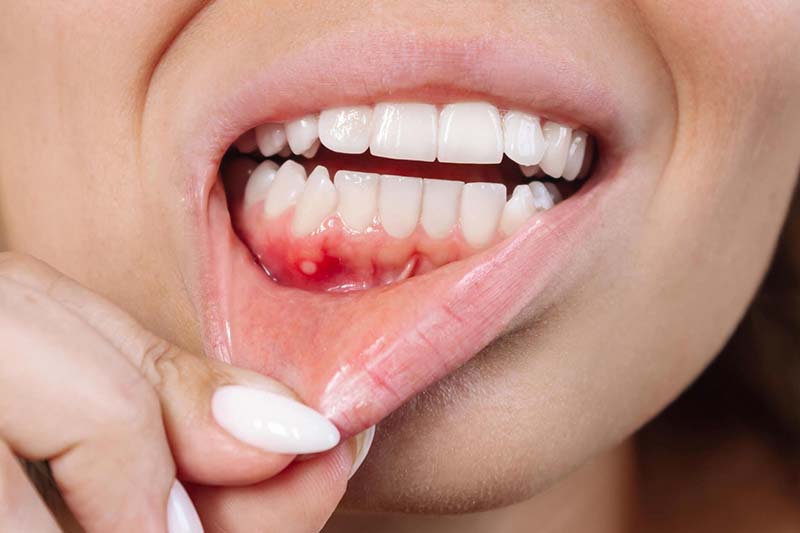
Mouth Ulcers commonly known as canker sores are painful lesions in the mouth or at the base of the gums or inside cheeks or lips. In scientific terms, it is the loss of tissue lining in the mouth. These are nothing to worry about as they are non-contagious and go away in around a week or two. However, if these are not healed in the period as said so or are large and extremely painful then it is advised to visit a dentist. The pain sometimes can be to the extent that it can make eating, talking and drinking difficult and uncomfortable.
Women, children and the one having a family history are most prone to developing Mouth Ulcers. Though the exact cause of Mouth Ulcers could not be known several factors can attribute to the same:
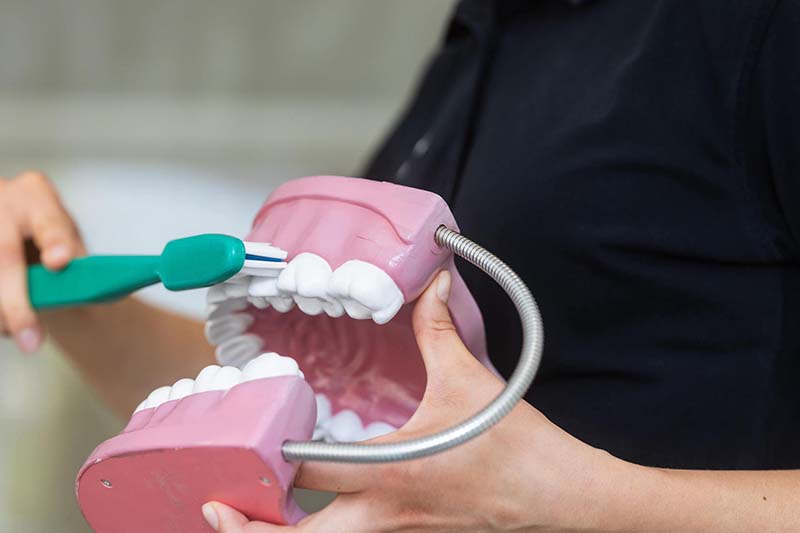
The practice of looking after your gums and teeth and maintaining good oral hygiene to keep them healthy is known as preventive dentistry. The main aim is to avoid cavities, gum infections, enamel wear, tooth loss and more. With the advent of years of refined diet, we have become more susceptible to oral diseases and hence maintaining them has become extremely important. With advancements in dentistry prevention of oral diseases has become easier. Maintenance of oral hygiene has to be practiced from an early age. The daily routines of brushing and flossing twice are the simplest form of preventive dentistry. Visiting a dentist with 6 months follow up is another way of preventing oral diseases. Children benefit most from the preventive dentistry protocol which as it allows their newly developed adult teeth to come strong and healthy. Preventive dentistry aims to prevent initiation and progress of dental diseases, limits their complications and also to provide rehabilitation.
PREVENTION OF DENTAL DECAY
Gum disease is an inflammation of the gum line that can progress to affect the bone that surrounds and supports your teeth. Gum Disease also known as Periodontal Disease begins with bacterial growth in the mouth, the localized inflammation of the gingiva is initiated by bacteria in the dental plaque, which is a microbial biofilm that forms on the teeth and gingiva. Nearly 70% of the people are affected by this disease at some point in their life. Though such a prevalent disease most people are unaware of the issue and the problems it can cause.
The primary cause of Gum Disease is poor oral hygiene. If you are not brushing or flossing properly, then the chances of bacteria build-up are high. However, there are other reasons as well such as:
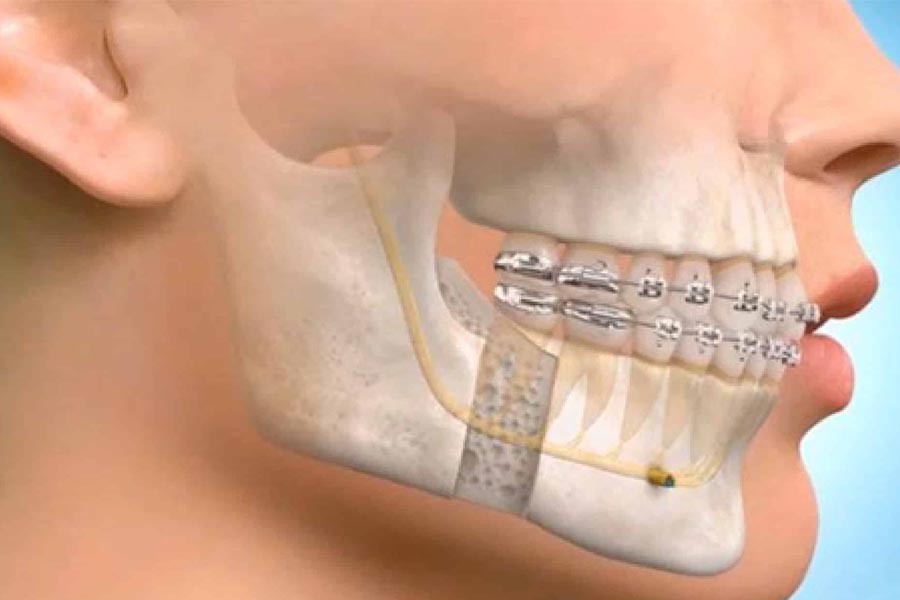
Maxillofacial treatment refers to the medical and surgical management of conditions and injuries affecting the face, jaw, and mouth. It is a specialized field within oral and maxillofacial surgery that focuses on the diagnosis, treatment, and rehabilitation of various maxillofacial disorders.
Mole removal is a medical procedure aimed at removing unwanted or potentially harmful moles from the skin. Moles are pigmented growths that can vary in size, color, and shape. While most moles are harmless, some may pose a risk of developing into skin cancer. Mole removal techniques include surgical excision, where the mole is cut out using a scalpel, and non-surgical methods like laser removal or cryotherapy, which involve freezing the mole. These procedures are typically performed by dermatologists and can help improve both cosmetic appearance and overall health.
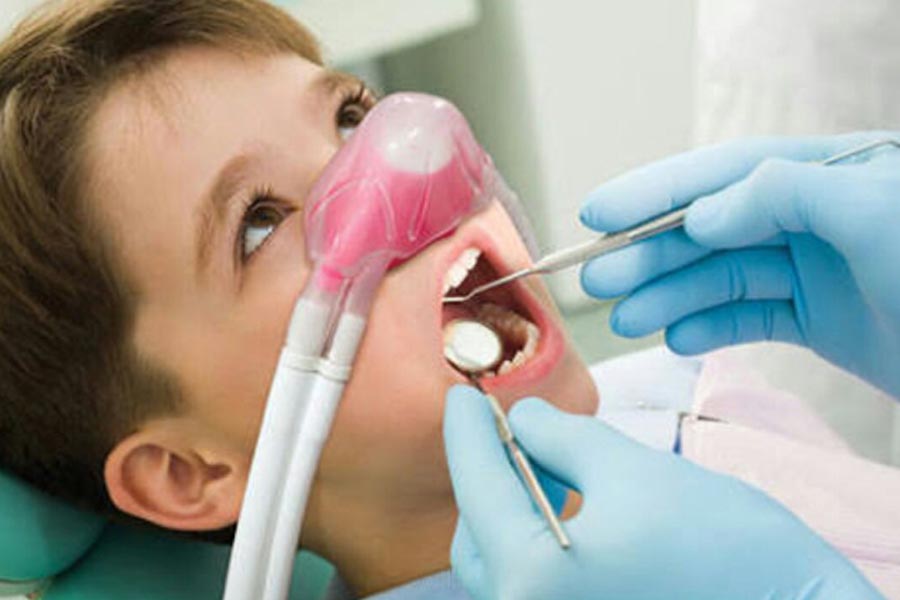
Conscious sedation is a combination of medicines that help you relax and block pain during a medical or dental procedure. It involves a drug-induced depression of consciousness, but patients retain the ability to self-ventilate, maintain protective reflexes, and respond to verbal or light-pressure stimuli.
Side effects of conscious sedation include: